
Why Retail-Ready Packaging Decides the Listing
A candy line can clear the taste panel, hit target cost, and still stall at the distribution center. In supermarket and chain-convenience sourcing, packaging and paperwork decide whether a product reaches the aisle and stays there. Retail-ready candy packaging is where product design, logistics and compliance meet — and where most avoidable listing failures begin.
Before price or flavour enters the discussion, category buyers screen a candy SKU against four questions:
- Can the distribution center receive it without handling every unit?
- Can store staff merchandise it without rebuilding a display?
- Can a shopper understand and buy it without asking for help?
- Can the product be traced and recalled through its printed codes?
A “no” to any of these turns the product into a handling liability, regardless of what is inside the wrapper. For a fuller view of how buyers structure the listing itself — from qualification to shelf date — our supermarket candy listing guide walks through the commercial stage in detail.
Ship-Ready vs Shelf-Ready: Where Listings Break
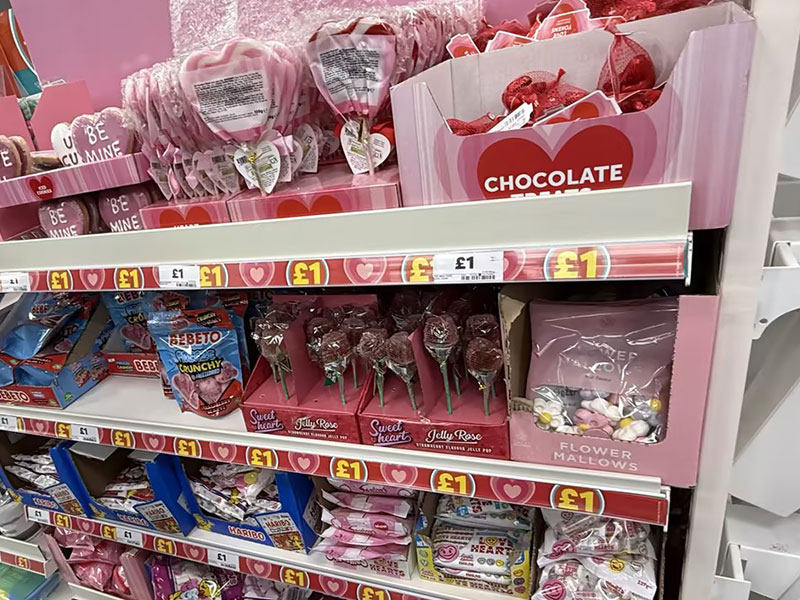
The two terms are often used interchangeably, and that is the first mistake a buyer makes. Ship-ready means the product survives transport and can be received and put away. Shelf-ready means the product can go onto the shelf and sell with minimal store labour. A carton that protects well but requires staff to break it, price it and rebuild it is ship-ready only.
| Dimension | Ship-Ready | Shelf-Ready | What the Buyer Checks |
|---|---|---|---|
| Primary unit | Protective master carton | Consumer unit that merchandises itself | Scan the unit, not the case |
| DC handling | Received, stored, re-shipped intact | Tray, sleeve or shelf-ready case drops straight out | Pallet and case ergonomics |
| Store labour | Staff open, sort, price, display | Minimal touch; unit is self-selling | Minutes-per-case assumption |
| Barcode scope | Case and pallet codes | Item GTIN plus case code | Both levels printed and scannable |
| Retailer expectation | Accepted for logistics | Accepted for the planogrammed set | Category buyer’s own spec sheet |
| Main risk | Damage and repack charges | Missed shelf date and delist | Documented in the supply agreement |
The practical judgment rule: ask the supplier to describe the shelf-ready unit, not the shipping unit. If the answer describes a carton, you are buying handling labour and absorbing the risk.
Candy Packaging Formats: How to Judge Before You Commit
Format selection follows the channel, not the other way around. A format that performs in an impulse rack can be wrong for a planogrammed set, and a format built for e-commerce may not survive a store backroom. Assess each option against weight, barrier need, print area and merchandising behaviour.
1. Flow Wrap and Candy Flow Pack
A candy flow pack seals the unit, or a small count of units, in film on a continuous line. It is the workhorse of high-volume singles because it protects the product, prints cleanly across the face, and stacks predictably. When specifying a flow pack, confirm the seal integrity, the film barrier against moisture and aroma migration, and whether the print area can carry the mandatory label elements without crowding. This format is common across boiled sweets — see how it is applied to hard candy — and it adapts well to shaped and filled pieces.
2. Stand-Up Pouches and Bagged Formats
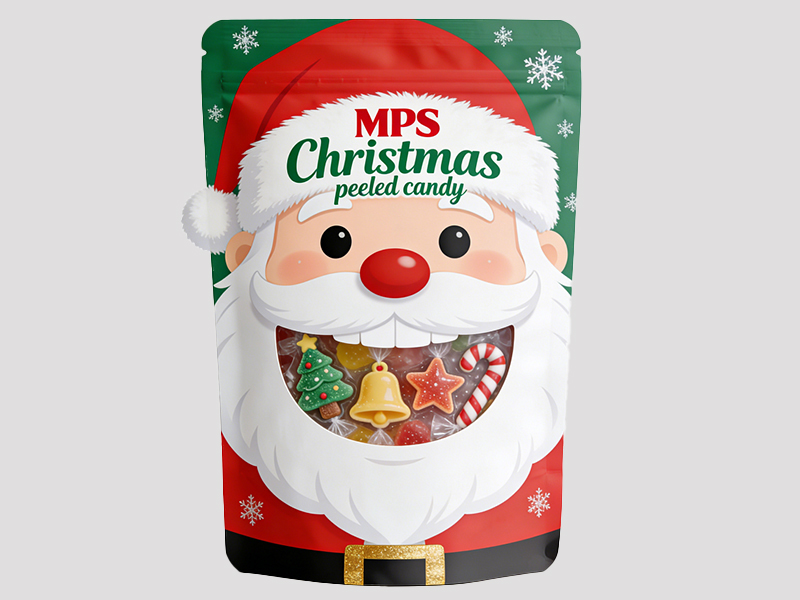
Stand-up pouches and peg-ready bags carry a larger count and a bigger communication area, which suits sharing and family formats. They resist shelf-edge visibility better than flow-wrapped singles, but they demand a heavier film structure and a resealable feature if the buyer’s set requires it. Confirm the gusset depth, hang-hole position and the base stability so the pouch stands without a shelf tray.
3. Countlines and Single-Serve Units
Countlines and single-serve units live at the till and in impulse fixtures. The specification that matters here is the price-point relationship to the unit weight, plus a label small enough for the format yet complete enough for the market. Small formats are where label crowding causes the most compliance errors.
4. Bulk and Bulk-in-Case Presentations
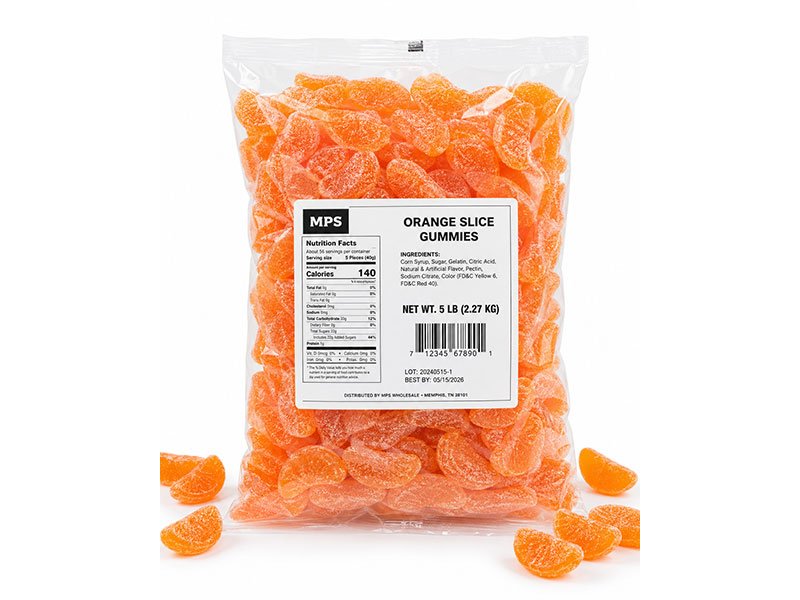
Bulk and bulk-in-case presentations serve pick-and-mix, repacking and ingredient buyers. Here the retail-ready question is reversed: the case must protect the product through repeated handling while staying light enough to lift. Confirm that the case is dimensioned to the buyer’s own pallet footprint, and note that gummy and jellied products — see our gummy candy range — often need tighter moisture control in bulk than in a sealed consumer pack.
| Format | Best-Fit Channel | Watch-Out Before Signing |
|---|---|---|
| Flow pack / flow wrap single | Convenience, impulse, vending | Seal integrity and label space on small faces |
| Stand-up pouch / bagged | Supermarket sets, e-commerce | Base stability, gusset depth, reseal requirement |
| Countline / single-serve | Till, impulse fixtures | Weight-to-price point and micro-label completeness |
| Bulk / bulk-in-case | Pick-and-mix, repacking, food service | Case ergonomics and moisture control in transit |
| Seasonal / gift presentation | Holiday and gifting sets | Structural protection and pack-date coding visibility |
Barcodes and Labeling: The Listing Gatekeepers
Packaging that looks right but scans wrong will be rejected at intake. Coding and labeling are the least glamorous and most frequently failed part of retail ready candy packaging.
1. GTINs, Case Codes and Scan Integrity
Each consumer unit needs a GTIN, and each case needs its own code so the DC can receive it without opening it. Verify that codes are printed at the correct magnification, have adequate quiet zones, and survive the film and the print process without smudging. Ask for a scan-verification report rather than a promise: an unscannable code becomes a manual-entry chargeback on the first delivery.
2. Nutrition and Allergen Panels
Nutrition declarations and allergen statements must match the approved formula, not an earlier version. Allergen cross-contact statements and the format of the declaration have to satisfy the destination market’s rules. The U.S. labeling framework is set out by the FDA’s food labeling and nutrition guidance, and the EU framework for food information to consumers is defined in Regulation (EU) No 1169/2011. Label artwork should be locked to the market, not reused across markets with a sticker.
3. Market Language and Formatting Rules
Language requirements, units of measure and mandatory statement order differ by market. Build a single artwork template per destination and freeze it before print, because late artwork changes are the most common cause of a missed shelf date.
Compliance Documents: The Buyer’s Checklist
Documentation is where a supplier’s real capability becomes visible. Request the file set below and verify that each certificate covers the actual production site that will run your order:
- Certificate of Analysis (COA) for the finished product and its key parameters
- Product specification sheet with formula, dimensions and packaging detail
- Nutrition analysis consistent with the printed label
- Allergen statement and cross-contact controls
- HACCP plan summary and control points
- ISO 22000 food safety management certification
- BRCGScertification for the manufacturing site
- IFS certification where the buyer’s market requires it
- Halal certificate where applicable — see ourhalal candycapability
- Kosher certificate where applicable
- FDA-relevant documentation, including facility registration and prior notice where required
- Traceability and recall procedure with code-to-batch mapping
Treat the checklist as a gate, not a formality. A supplier who cannot produce these files for the named site will not produce them during a recall.
Shelf Life and Shelf-Life Packaging
Shelf life is a packaging decision as much as a formula decision. Moisture ingress, aroma migration and light exposure all shorten usable life, and they are controlled by film structure, seal quality and secondary packaging — the core of candy shelf life packaging. Buyers should confirm the supplier’s validated shelf life for the specific formula and pack format, verify the pack-date and best-before coding method, and agree how remaining shelf life is measured on arrival at the DC. Where a retailer sets a minimum remaining-life threshold at receipt, that threshold belongs in the supply agreement so the coding and shipping schedule can be planned around it. Industry bodies such as the National Confectioners Association publish category context that helps buyers frame these expectations for their own set.
Case Pack and Pallet Configuration
The case pack is the unit the buyer actually orders, receipts and stores, yet it is often decided last. Agree it early. Confirm the number of consumer units per case, the case dimensions and gross weight, the stacking strength, and whether the case is a display-ready tray or a plain shipping carton. Then confirm the pallet: dimensions, pattern, layer count and stretch-wrapping standard that matches the buyer’s DC. A mismatch here shows up as rework at intake, and rework at intake is charged back to the supplier.

Plan Backward from the Shelf Date
The shelf date is fixed by the retailer’s promotional calendar and cannot move. Every other date is negotiable, which means the whole programme should be planned backward from that single anchor.
| Stage (relative to shelf date) | What Happens | Who Owns It |
|---|---|---|
| Shelf date (T-0) | Product on shelf and selling | Retailer |
| T-2 weeks | Store delivery window closed and confirmed | Buyer + logistics |
| T-4 to T-3 weeks | Goods shipped and cleared at destination | Supplier + broker |
| T-8 to T-6 weeks | Production run and packing completed | Supplier |
| T-12 to T-10 weeks | Artwork, labels and compliance files approved | Buyer + supplier QA |
| T-16 to T-14 weeks | Specification locked: format, case pack, pallet | Buyer + supplier |
| T-20 to T-18 weeks | Samples, COA and certificates reviewed | Buyer QA |
Private Label and Custom Packaging: When to Move Beyond Stock
Retail-ready stock packaging is the fastest route to a first listing. Private label candy packaging becomes worthwhile when a retailer wants its own brand identity, a differentiated format, or a price-point architecture that stock cannot deliver. At that point the specification expands to include custom film artwork, bespoke case and pallet dimensions, and market-specific label sets.
Evaluate the move on three tests: does the supplier support custom formula development, can it produce custom packaging at commercial scale, and does it hold the documentation to support the retailer’s own audit? Suppliers offering OEM/ODM and private label programmes, with in-house R&D support, can usually shorten the specification cycle because formula, format and artwork are developed together rather than sequentially.
On volume, plan the minimum order into the schedule. For many candy products, the typical MOQ is approximately 2–4 metric tons per flavor, depending on formula, shape, production process and packaging requirements.
Choosing a Packaging-Ready Manufacturing Partner
Screen the partner on the same criteria the retailer will apply to you. Look for a documented compliance system, in-house R&D support, OEM/ODM and private label experience, custom formula and custom packaging capability, and a multi-factory supply chain that can absorb seasonal peaks without moving your approved production site. Scale signals worth verifying include 30+ production lines and a working quality system rather than a marketing claim.
MPS Sweets works with importers, distributors and private label buyers on retail-ready formats, compliance files and custom packaging programmes. If you are preparing a supermarket listing and want the specification and documentation reviewed before you commit, request our retail-ready packaging and compliance checklist through the company profile contact page and our export team will respond with the format and file set that matches your category and market.
FAQ
1. What does “retail ready” mean for candy packaging?
Retail ready means the product can be received, merchandised and sold with minimal handling between the distribution center and the shelf. It combines a consumer unit that sells itself, codes that scan at both item and case level, complete labels and documentation, and a case pack that fits the retailer’s pallet and shelving.
2. What is the difference between ship-ready and shelf-ready candy packaging?
Ship-ready packaging only needs to protect the product in transit and be receivable. Shelf-ready packaging must also merchandise itself on the shelf. A protective shipping carton that requires store staff to open, sort, price and display it is ship-ready but not shelf-ready, and that difference is where handling cost and delisting risk sit.
3. What barcode and labeling information must appear on supermarket candy packaging?
Expect a GTIN on every consumer unit, a separate case code for the distribution center, nutrition and allergen declarations that match the approved formula, and market-specific language and formatting. All codes need correct magnification and quiet zones, and a scan-verification report should be provided before the first delivery.
4. Which compliance documents should a buyer request before listing a candy SKU?
Request a Certificate of Analysis, a product specification sheet, nutrition analysis, an allergen statement, a HACCP plan summary, ISO 22000, BRCGS and IFS certificates where required, Halal and Kosher certificates where applicable, FDA-relevant documentation, and a traceability and recall procedure. Confirm that every certificate names the actual production site for your order.
5. How should a buyer plan lead times for a candy listing?
Plan backward from the fixed shelf date. Approve samples and certificates first, then lock the specification, artwork and case pack, then schedule production, then confirm shipping and clearance, and finally close the store delivery window. Every stage earlier than production is under the buyer’s control and is where late changes originate.
6. Can retail-ready candy packaging be customized for a private label programme?
Yes. Private label programmes typically add custom film artwork, bespoke case and pallet dimensions and market-specific label sets on top of the retail-ready baseline. Choose a supplier with custom formula and custom packaging capability, OEM/ODM experience and R&D support so the specification, packaging and artwork can be developed together.